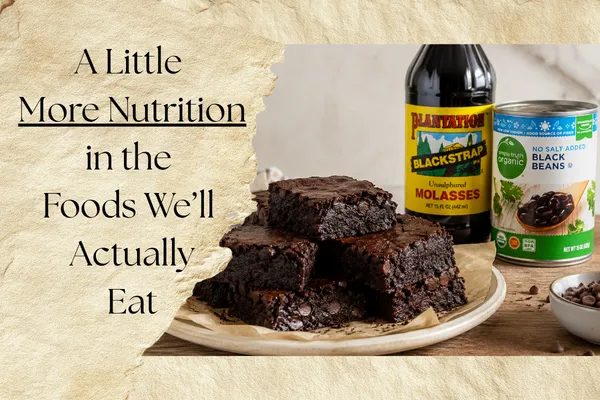
A Little More Nutrition in the Foods We’ll Actually Eat
I have a very picky 14-year-old daughter. And when I say picky, I mean she will sometimes literally choose to leave the dinner table hungry rather than eat what I made.
Which is a little insulting considering I grew up in a family that once owned a very reputable steakhouse in Texas and, according to the rest of my family, I’m actually a pretty darn good cook. 😂
But this isn’t really about picky kids. It’s about something I think a lot of us forget: food can do a lot more nutritional heavy lifting than we give it credit for.
Supplements absolutely have their place, especially when there’s a true deficiency. But sometimes it’s worth asking:
What can I add to my diet first?
You don’t need to overhaul your entire life or start surviving on kale smoothies. Sometimes a few little changes can make foods we already enjoy work a little harder for us.
One of My Favorite Tricks: Blackstrap Molasses
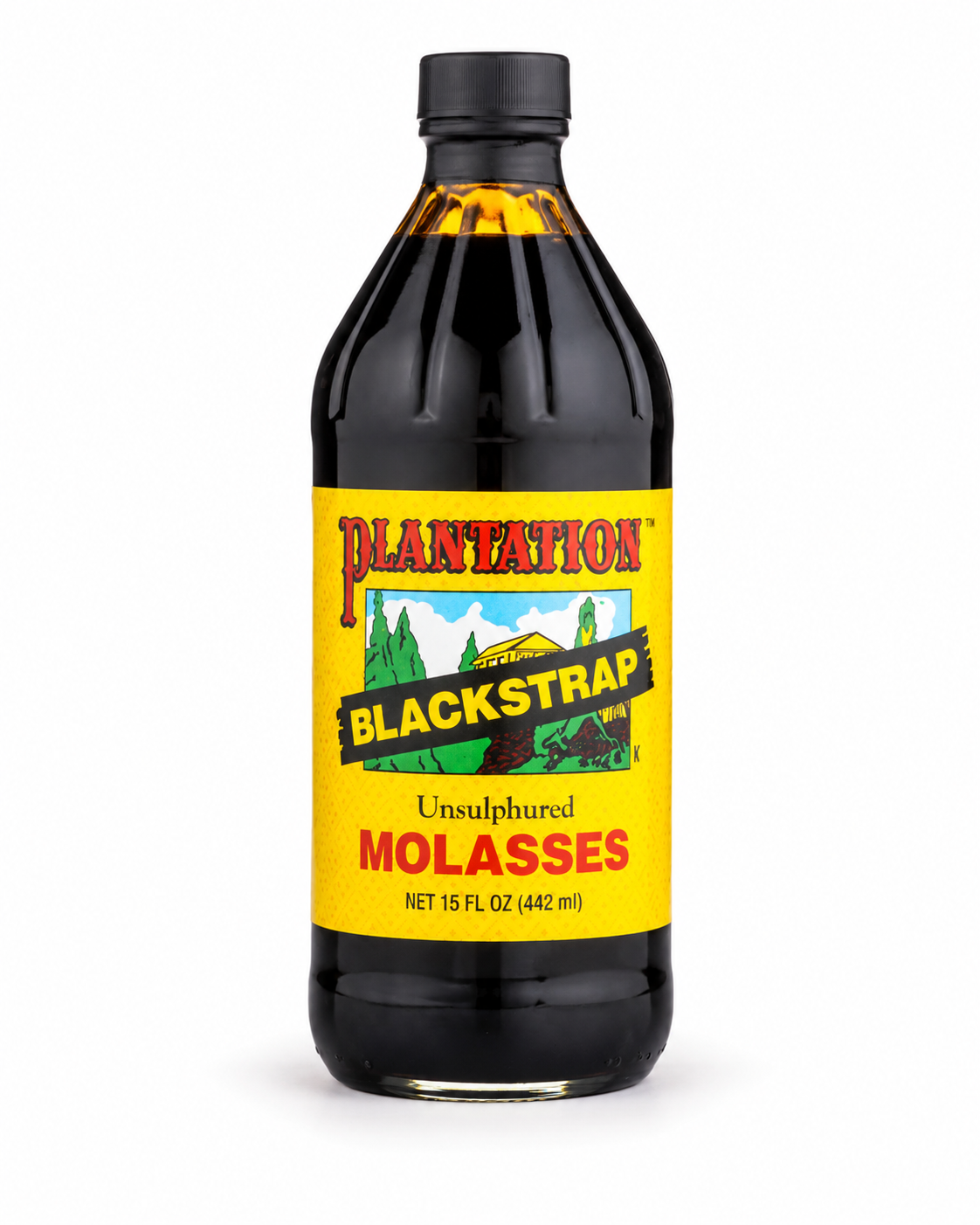
Blackstrap molasses is one of those old-fashioned ingredients I think deserves a little more attention.
Unlike regular cane sugar, it contains measurable amounts of iron, magnesium, calcium, potassium, and copper.
The catch? It tastes very… mineral-y.
So I don’t replace all the sugar with it. I replace a portion and leave the rest as regular or organic cane sugar. And that brings us to chocolate.
Yes, Chocolate Gets to Stay
Unsweetened cocoa and cacao both contain minerals including magnesium, iron, copper, and potassium.
Cacao is generally less processed, but a good unsweetened cocoa powder is still a great option. Use what you have. We are not creating a cacao crisis in aisle seven.
Chocolate also happens to do a wonderful job of mellowing the stronger flavor of blackstrap molasses.
These are still brownies, people.
Dessert — not dinner.
We’re just making dessert work a little harder nutritionally.
A Quick Word About Iron
Iron gets a lot of attention, especially when we talk about low iron and low ferritin, but nutrients don’t work alone.
Vitamin C helps improve the absorption of non-heme iron, which is the form of iron found in plant foods, while copper plays an important role in normal iron metabolism and transport.
That’s one of the things I love about food: instead of one isolated nutrient, we often get several nutrients and beneficial plant compounds together.
How Much Do We Actually Need?
Just for a little perspective, here are general daily recommendations for healthy adults:
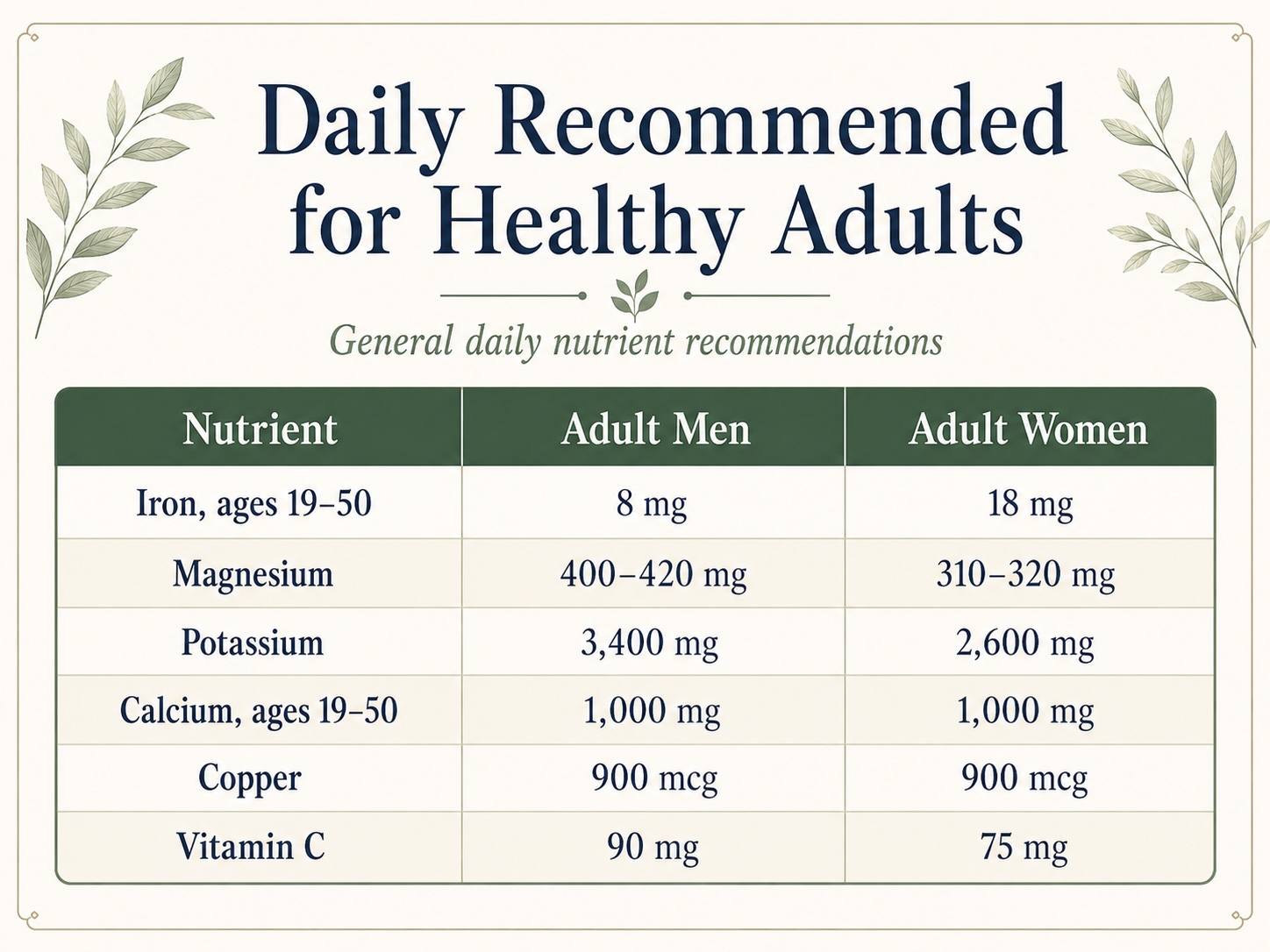
Needs can change with age, pregnancy, breastfeeding, menstrual status, medications, and health conditions.
These numbers aren’t meant to make you start tallying every bite of food you take.
They’re simply a little perspective.
Once we know what our bodies actually need, we can start looking at food a little differently.
Fudgy Black Bean Brownies
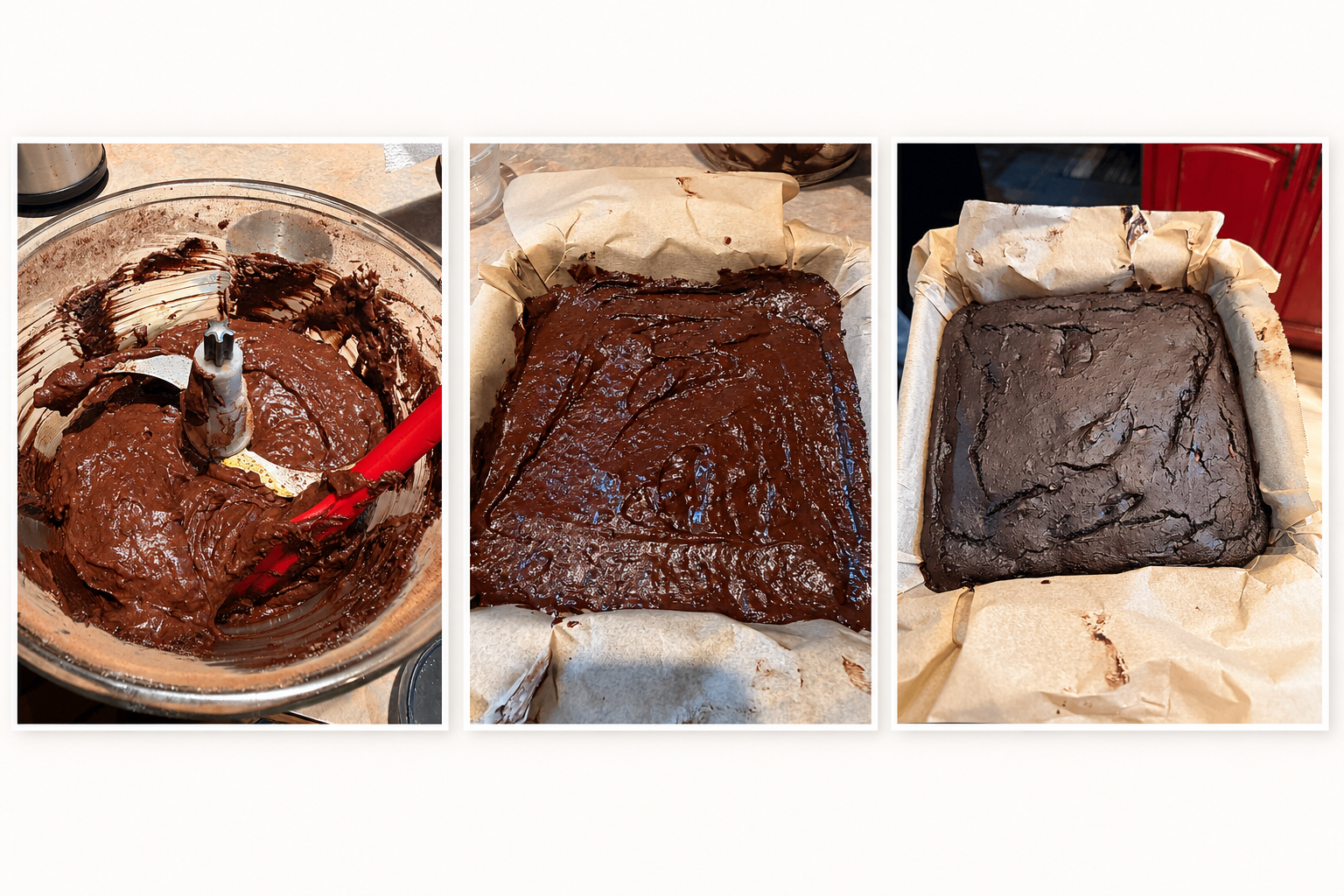
Now for the good part. Black bean brownies sound a little questionable until you actually make them.
I made these myself before sharing them with you and, people...They’re freaking delicious.
They’re much more fudgy than cakey, and the black beans bring fiber, protein, iron, magnesium, potassium, and folate to the party. Then we add cocoa, blackstrap molasses, and yes — chocolate chips.
The result is still absolutely dessert, but it has a little more going for it than your average brownie.
🖨 Want the Recipe?
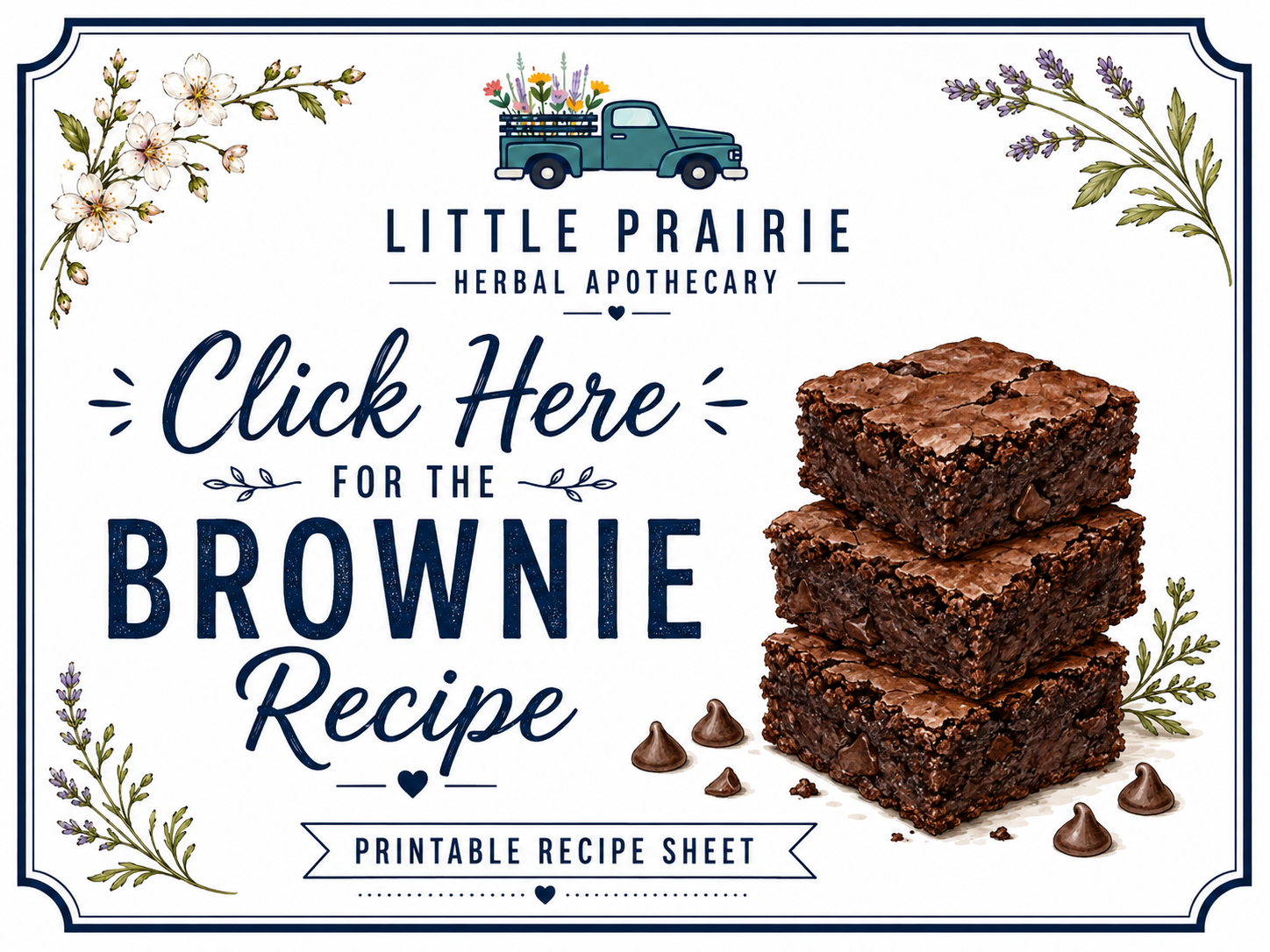
One little note from actually making them: black beans can vary quite a bit in moisture depending on the brand, how thoroughly they’re drained, or whether you cooked the beans yourself.
These brownies are intentionally fudgy and delicate. If yours turn out a little crumbly, pop them in the freezer for a little while.
They stay soft enough to eat but hold together much better.
And honestly? They’re pretty darn good cold.
Because I’m an Herbalist and I Just Can’t Help Myself...
We have to talk about tea for a minute. 😂
A simple mineral tea is another easy way to work nutritive herbs into your everyday routine.
My simple blend uses:
Nettle leaf • Oatstraw • Red raspberry leaf • Rose hips • Hibiscus
Nettle, oatstraw, and raspberry leaf have a long history of use as nutritive herbs, while rose hips and hibiscus brighten the flavor and make the whole thing a lot more enjoyable to drink.
Because at the end of the day, the best herbal tea is the one you’re actually going to drink.
🖨 Want the Tea Recipe?
One More Easy Option
If you’d rather have something already made, check out our Rebuild Vinegar.
It’s an herbal oxymel made with apple cider vinegar, vegetable glycerin, raw honey, marshmallow root, burdock root, stinging nettle leaf, oatstraw, and red clover blossom.
I originally created it for nourishing support after cleanses, but it’s also an easy way to work nutritive herbs into an everyday routine.
You can sip it diluted in water, add it to sparkling water, or even use it in homemade salad dressings and vinaigrettes.
CHECK OUT REBUILD VINEGAR →
https://littleprairieherbs.com/product-details/product/rebuild-remineralizing-support
Small Swaps Add Up
This isn’t about creating the perfect diet.
And it definitely isn’t just about feeding children.
It could be a picky teenager.
It could be a busy mom who suddenly realizes she’s been surviving on coffee until noon.
It could simply be someone trying to pay a little more attention to iron, magnesium, potassium, calcium, or other nutrients.
The point is becoming curious about what’s already in our food — and where we can sneak in a little more nourishment.
Beans
Cacao
Blackstrap molasses
Seeds
Greens
Fruit
Herbs
Good proteins
None of these things has to be complicated. Little choices really do add up. And if I can make a brownie taste amazing and make it work a little harder nutritionally? I’m calling that a win.
Disclaimer: Nutritional values and nutrient information are provided for general educational purposes only and can vary depending on ingredient brands, measurements, preparation methods, and serving sizes.This information is not intended to diagnose or treat a nutritional deficiency. If you have anemia, very low ferritin, an electrolyte abnormality, or another known or suspected nutrient deficiency, work with a qualified healthcare professional.
Sources & Further Reading
USDA FoodData Central
https://fdc.nal.usda.gov/NIH Office of Dietary Supplements
https://ods.od.nih.gov/PubMed — Copper/Iron Connection
https://pubmed.ncbi.nlm.nih.gov/10697391/


